

Sponsored ContentPartner ContentTue 23 Jun 26
High Court Ruling Reshapes Nuisance Risk for Developers

Lockton head of claims Jeff Williams and Lockton head of construction Peter Jeeves explain how a recent High Court decision is reshaping risk for developers, contractors and infrastructure owners.
For years, the construction industry has assumed properly approved and carefully executed projects can manage legal exposure from construction impacts.
Hunt Leather v Transport for NSW challenges that assumption. The High Court of Australia confirmed private nuisance is distinct from negligence.
Negligence focuses on the reasonableness of conduct. Nuisance concerns the reasonableness of the interference. A defendant may act with due care and still be liable in nuisance where the interference is unreasonable.
For developers, project owners, contractors and investors, the ruling signals that authorised construction activity can still create significant liability where neighbouring businesses experience prolonged disruption.
The project that sparked the case
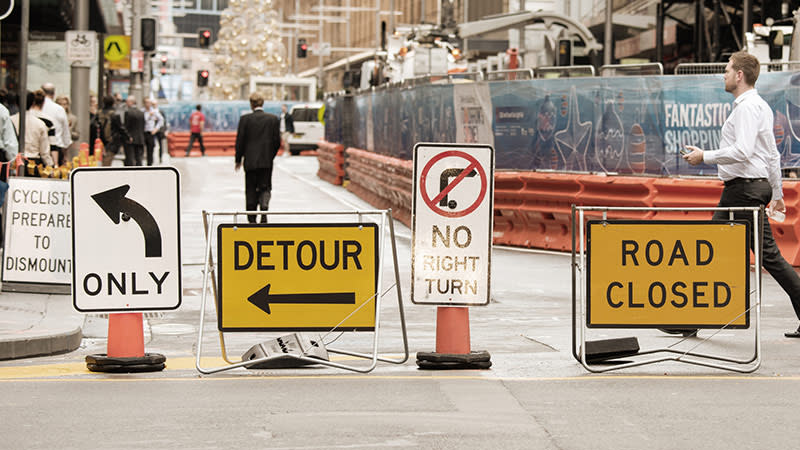
The dispute arose from construction of the Sydney Light Rail. Businesses along the route experienced significant disruption, including restricted access, noise, dust and extended works that ran beyond the originally communicated timeframe. They argued this materially interfered with their ability to use their premises and caused economic loss.
The High Court found Transport for NSW could be liable in private nuisance for part of the construction period. It stressed that duration, mitigation and the degree of control exercised over delivery are what determine liability, not the project’s existence.
Why this matters to the development industry
Urban construction projects are larger, more complex and increasingly embedded within densely populated environments and construction activity inevitably affects surrounding stakeholders.
Historically, many participants took comfort from planning approvals, legislation or government powers. The High Court’s decision narrows that comfort.
Statutory approval alone may not shield project participants from nuisance claims if impacts extend beyond what is reasonable.
Risk is no longer assessed solely through compliance, but through how disruption is managed throughout a project’s life.

Four lessons for project leaders
1. Duration matters
The Court placed significant emphasis on the length of disruption. Temporary inconvenience is often unavoidable, but impacts continuing longer than anticipated may attract greater scrutiny, particularly where neighbouring businesses rely on customer access or uninterrupted operations.
2. Mitigation is becoming more important
Construction activity may be carried out responsibly and still create liability if reasonable steps to reduce disruption aren’t evident.
Stakeholder communication, access management, traffic planning, dust control and noise mitigation are becoming important components of project risk management, not just community engagement.
3. Economic loss claims may become more common
The decision raises the potential for claims linked to business interruption and loss of profit.
For projects in busy commercial precincts, neighbouring businesses may increasingly explore legal avenues where prolonged disruption affects revenue.
This introduces a commercial risk many project teams have not traditionally considered.
4. Liability may extend beyond contractors
The ruling also highlights the importance of control.
As delivery models become more collaborative, responsibility may not rest solely with the contractor performing the work.
Developers, principals and other parties with influence over delivery may also attract scrutiny, making governance and risk allocation increasingly important.
What does this mean for insurance?
The insurance implications are still evolving, but the decision is likely to prompt renewed attention from insurers and insureds alike.
Questions are already emerging around how nuisance-related claims interact with public liability programs, principal-controlled arrangements and existing policy definitions.
Project owners and contractors may need a more integrated approach, ensuring insurance strategy aligns with contractual obligations, project governance and stakeholder management.
Looking ahead
Successful delivery is no longer measured solely by cost and compliance. Managing the relationship between a project and its surrounding community is becoming an increasingly important part of risk management.
Projects that adapt early are likely best positioned to navigate this evolving landscape.
To learn more about the legal, commercial and insurance implications of this significant High Court decision, visit our website: Private Nuisance Reimagined: A New Risk Landscape for Construction Projects | Lockton
Contents of this publication are provided for general information only. It is not intended to be interpreted as advice on which you should rely and may not necessarily be suitable for you. You must obtain professional or specialist advice before taking, or refraining from, any action on the basis of the content in this publication. Lockton arranges the insurance and is not the insurer. Any insurance cover is subject to the terms, conditions and exclusions of the policy. For full details refer to the specific policy wordings and/or Product Disclosure Statements available from Lockton on request.
The Urban Developer is proud to partner with Lockton to deliver this article to you. In doing so, we can continue to publish our daily news, information, insights and opinion to you, our valued readers.





